The Biggest Compliance Mistakes Irish Estate Agents Make (and How to Avoid Them)
For an Irish letting or estate agent, compliance isn't just a legal box to tick — it's the thing your landlord clients are paying you to get right. Miss an RTB deadline, over-shoot the rent cap, serve an invalid notice or under-document your AML checks, and you don't just risk a fine: you risk the client, the contract and your PSRA licence. Here are the ten mistakes we see most often across Irish agencies in 2026 — and the repeatable workflow that designs each one out.
The short version
- Nearly every agency compliance failure is a tracking or calculation error, not a knowledge gap — a missed date, a rent figure that breached the cap, a notice with the wrong period.
- For agents the stakes are doubled: you carry your own PSRA obligations (licence, engagement letter, client account, AML) and your clients' RTB obligations across their whole portfolio.
- The three costliest mistakes in 2026: missing the RTB one-month registration / annual renewal deadline, breaching the new national rent cap (2% or CPI, whichever is lower), and serving an invalid notice of termination.
- The fix isn't more diligence — it's a system: one source of truth, deadlines computed automatically, forms and notices generated in the correct format, a portfolio dashboard, and an audit trail that builds itself.
If you take one thing from this guide: you can't out-remember a compliance load that grows every time you win an instruction. You beat it with a repeatable system — and the ten mistakes below are exactly the ones a good system removes.
Why compliance is higher-stakes for agents than landlords
A landlord with one property has one set of obligations to remember. A letting or estate agent carries two layers of them: your clients' obligations under residential tenancies law, multiplied across every property you manage — and your own obligations as a regulated property services provider.
That second layer is what makes agent compliance different. In Ireland, letting and estate agents are licensed and regulated by the Property Services Regulatory Authority (PSRA), and are also designated persons under anti-money-laundering law. So when a deadline slips, it isn't only the landlord who is exposed — it's your firm, your licence and your professional reputation. From the client's seat, "you had one job" is precisely the feeling a missed registration creates.
Compliance is a client-retention issue, not just a legal one
When you register, review rent or serve a notice on a landlord's behalf, their compliance is your work product. Get it wrong and you don't just risk an RTB sanction — you hand the client a reason to move their portfolio to another agent. At scale, the agencies that retain clients are the ones that never give them a compliance scare in the first place.
The encouraging part: because these failures are systematic, the solution can be too. None of the ten mistakes below requires heroics to avoid — each one is designed out by putting the right information in one place and letting the system surface what's due.
1. Missing the RTB registration & annual renewal deadline
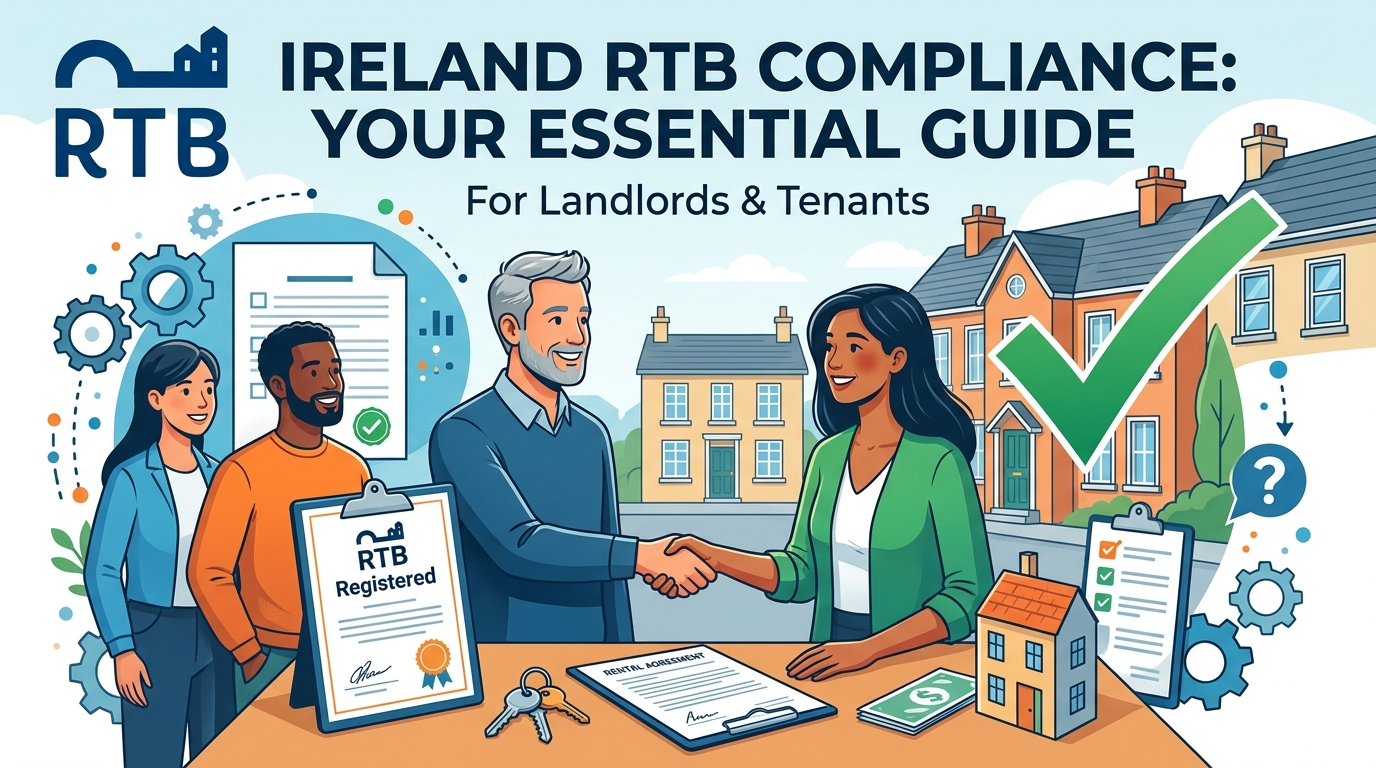
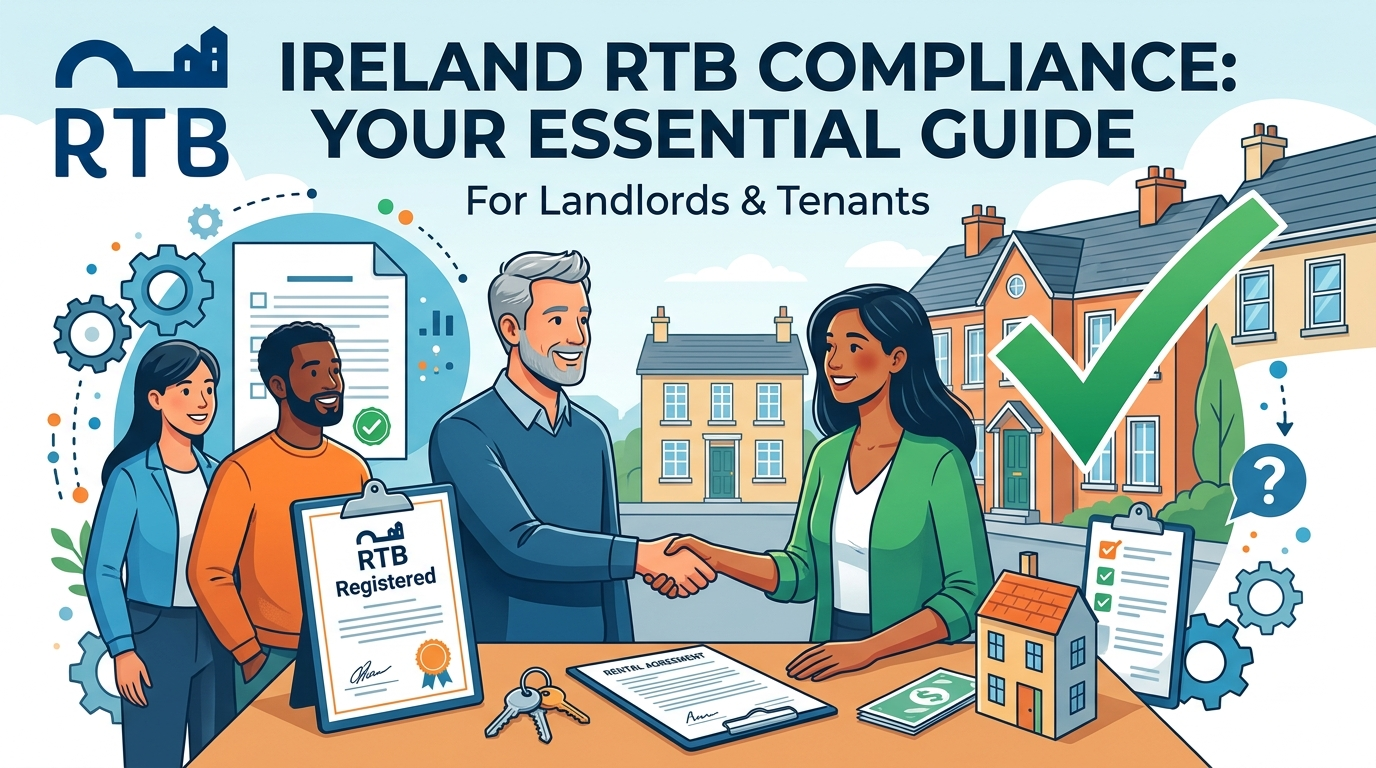
The mistake: A new tenancy isn't registered with the Residential Tenancies Board within one month of commencement, or an annual renewal quietly falls due and nobody notices until it's late. Across a book of dozens of tenancies, this is the single most common failure we see.
Why it hurts: A late registration typically means a higher late fee, a gap in the compliance record that weakens the landlord in any future RTB dispute, and a knock to the landlord's tax position. For the agency, it's the fastest route to an awkward client conversation — and a lost contract.
How to avoid it: Stop tracking deadlines by hand. Capture each tenancy's commencement date once, and let your system compute the one-month registration window and the annual renewal anniversary automatically, then surface them before they're due. For the detail of the window and what "late" actually costs, see our guide to the RTB registration deadline, and for running this across a whole book, our bulk RTB compliance workflow.
See every RTB deadline before it slips
Book a 15-minute agency demo and we'll show you a live compliance dashboard on data shaped like your own — registration and renewal computed from each tenancy's start date, colour-coded compliant, upcoming or overdue.
2. Getting rent reviews wrong under the 2026 national rent cap
The mistake: Setting a rent increase above the permitted cap, reviewing rent more often than allowed, or serving the review with the wrong notice or evidence. Since 1 March 2026, rent controls apply nationally, and the cap is 2% or inflation (CPI), whichever is lower.
Why it hurts: An increase above the cap is invalid. The tenant can bring it to the RTB, the increase can be struck down, and the landlord may face a refund order — with the agent's advice squarely in the frame. Rent reviews are also where agencies most often rely on a quick mental calculation that turns out to be wrong.
How to avoid it: Never eyeball a rent increase. Use a calculator that applies the current national rent cap, compares 2% against the latest CPI figure, and records the figure and rule it used so the review is defensible. Our national rent cap guide for agents and the free rent increase calculator walk through the maths.
Rule of thumb for 2026
Treat every rent review as "prove it, don't guess it." If you can't show which figure (2% or CPI) you applied and why, you're one dispute away from a problem. Always confirm the current CPI-linked cap on rtb.ie before serving the notice.
3. Serving an invalid notice of termination
The mistake: Using a generic notice template that states the wrong termination date, gives too short a notice period for the tenancy's length, omits a required statutory declaration or reason, or is served incorrectly.
Why it hurts: Notice periods in Ireland increase with the length of the tenancy, so a one-size-fits-all template is a trap. An invalid notice of termination can be struck down by the RTB, forcing the entire process — and the clock — to start again, sometimes months later. For a landlord trying to sell or move back in, that delay is expensive and it's the agent who wears it.
How to avoid it: Generate every notice from the tenancy data you already hold, so the correct notice period is applied to the tenancy's actual duration and the format follows the current statutory requirements. Our guide to Part 4 tenancies and notice periods breaks down the sliding scale, and the notice of termination explainer covers the format.
4. Mishandling deposits and deposit records
The mistake: Retaining a deposit without a clear, documented reason, failing to keep evidence of the property's condition, or having no consistent record of what was taken, held and returned across the portfolio.
Why it hurts: Deposit retention is one of the most common causes of RTB disputes. Without dated evidence — an inventory, condition report, receipts for repairs — the agency is defending a deduction from memory, and usually loses. Multiply that across a book and it's a recurring, avoidable drain.
How to avoid it: Treat the deposit as a records exercise from day one: capture the amount and date held against the tenancy, attach the inventory and condition evidence, and log any deduction with its reason and supporting receipts. When a dispute arrives, you're pulling a complete file rather than reconstructing one. Always check the current deposit rules on rtb.ie, as the statutory position continues to evolve.
5. Letting BER, gas, electrical & minimum standards lapse
The mistake: Losing track of the certificates and standards a rented property must meet — a valid BER for advertising, gas and electrical safety, and the statutory minimum standards for rental accommodation — especially when certs expire mid-tenancy.
Why it hurts: Advertising a property without a valid BER, or letting one that fails minimum standards, exposes the landlord to enforcement by the local authority and undermines any position in a dispute. These are easy to forget precisely because they're not tied to a single obvious deadline the way registration is.
How to avoid it: Hold certificate types and expiry dates against each property, and let the system flag anything expiring in the next 30–60 days — the same way it treats a registration renewal. A property's compliance status should be visible at a glance, not discovered when a tenant complains.
Put certificates on the same dashboard as your deadlines
See how TenantSync tracks BER, gas and electrical expiry alongside RTB registration and rent reviews — one status view per property, across every landlord client.
6. Weak anti-money-laundering (AML) due diligence
The mistake: Treating AML as a formality — skipping or under-documenting customer due diligence, not verifying client identity properly, or keeping no retrievable record of the checks that were done.
Why it hurts: Property services providers are designated persons under Ireland's anti-money-laundering legislation. That means identity verification, ongoing monitoring, record-keeping and, where warranted, reporting suspicious transactions are legal obligations, not best-practice extras. AML is an increasing focus of regulatory attention, and "we didn't get around to the paperwork" is not a defence.
How to avoid it: Build due diligence into onboarding rather than bolting it on afterwards. Capture and store identity documents and the date and outcome of each check against the client record, so the trail is retrievable in seconds if you're asked to produce it. Confirm your current obligations with the PSRA and the Department of Justice AML guidance.
7. PSRA gaps: licence, engagement letter and client account
The mistake: Letting a PSRA licence or professional indemnity insurance lapse, working without a signed letter of engagement, or not maintaining a properly reconciled client account for rent held on landlords' behalf.
Why it hurts: These are the obligations that go to the heart of your authorisation to trade. A gap here isn't a client-service issue — it's a regulatory one that can threaten the licence itself. The letter of engagement is also your commercial protection: without it, fee disputes and scope arguments are much harder to win.
How to avoid it: Track licence and insurance renewal dates the same way you track tenancy deadlines, issue a compliant letter of engagement before you act for any client, and keep rent-handling reconciled and auditable. Our letter of engagement guide and our overview of running a PSRA-licensed, tech-enabled agency go deeper.
8. Getting Part 4 & security of tenure wrong
The mistake: Misjudging a tenant's Part 4 rights, the Tenancy of Minimum Duration framework, or the difference in obligations between smaller and larger landlords — and advising or acting on that misjudgement.
Why it hurts: Security-of-tenure rules determine when and on what grounds a tenancy can end. Get them wrong and any notice built on top is exposed, the landlord's plans stall, and the agency has given advice that doesn't hold up. These rules have moved considerably in recent reforms, so relying on how it "used to work" is risky.
How to avoid it: Keep each tenancy's key facts — start date, tenancy type, landlord category — in one place so the applicable rights are unambiguous, and check the current position before acting on a termination. Our Part 4 and minimum-duration guide lays out the framework as it stands for 2026.
9. Sloppy GDPR and data handling
The mistake: Holding tenant and landlord personal data across scattered spreadsheets, personal inboxes and WhatsApp threads, with no clear control over who can see what, how long it's kept, or how it's secured.
Why it hurts: Agencies handle exactly the kind of personal and financial data the GDPR is designed to protect — identity documents, payment details, references. Data scattered across personal accounts is impossible to secure, hard to delete on request, and a real breach risk. It's a quiet liability that only becomes loud when something goes wrong.
How to avoid it: Consolidate personal data into a single, access-controlled system rather than personal inboxes and files, so retention, access and security are managed in one place. This is also a straightforward professionalism signal to clients — their data is handled properly, by design. Refer to the Data Protection Commission's guidance for your specific obligations.
10. Running compliance on memory and spreadsheets
The mistake: The meta-mistake that causes most of the other nine — trying to run portfolio-wide compliance out of spreadsheets, diaries and people's heads. It works until the agency grows past what one person can hold in memory.
Why it hurts: Spreadsheets don't compute deadlines, don't validate a rent cap, don't generate a correctly-formatted notice and don't tell you what's wrong right now without reading every row. Every failure above traces back to information living in silos and reminders depending on a person being at their desk.
How to avoid it: Move to a single system that treats compliance as data, not memory. Our guide to migrating a letting agency off spreadsheets covers how to make the switch without losing history — and why agencies that do it stop having compliance scares.
The pattern behind all ten
Notice that not one of these mistakes is about not knowing the law. They're all about where information lives and what surfaces it. That's why the answer is the same for every one: a system that holds the data, computes the dates and shows you the exceptions.
The workflow that prevents all ten
Because the mistakes share a root cause, they share a cure. Here's the six-step workflow that turns compliance from a memory test into a system. It's deliberately tool-agnostic — but each step gets dramatically easier when software does the computing and surfacing for you.
| Step | What you do | Mistakes it removes |
|---|---|---|
| 1. One source of truth | Import every property, tenancy, lease and rent record into a single system. | #9 data handling, #10 spreadsheets |
| 2. Compute the dates | Derive the one-month registration window and annual renewal from each start date. | #1 RTB deadlines, #5 certificates |
| 3. Validate rent reviews | Check every increase against the 2% / CPI cap and record the figure used. | #2 rent cap |
| 4. Generate forms & notices | Produce the Form 1 and notices from held data, in the correct format and period. | #1 registration, #3 notices, #8 Part 4 |
| 5. Portfolio dashboard | Show status per tenancy — compliant, upcoming, overdue — across every client. | #1, #5, #7 licence renewals |
| 6. Audit trail | Log every action, cert, notice and check with a time-stamp as it happens. | #4 deposits, #6 AML, #7 client account |
The workflow in one line
One source of truth → dates computed once → rent reviews validated → forms and notices generated correctly → a dashboard that shows status across the book → an audit trail that builds itself. No step relies on a person remembering.
How TenantSync designs out the mistakes
TenantSync is an Irish-built platform designed around exactly this problem: keeping a whole book of client tenancies compliant without anyone having to hold the deadlines, caps and formats in their head. Every capability below maps directly to one or more of the ten mistakes.
Deadlines computed automatically
The one-month RTB registration window and the annual renewal date are calculated from each tenancy's commencement date and tracked from then on — removing mistake #1.
National rent-cap calculator
Works out the maximum legal increase under the post-March-2026 rules — 2% or CPI, whichever is lower — and shows the rule and figure it used, so every review is defensible. Removes mistake #2.
Form 1 & notices from held data
Pre-fill the RTB Form 1 and generate notices of termination with the correct period from data you already hold — no re-keying, no wrong-format templates. Removes mistakes #1 and #3.
Portfolio compliance dashboard
Registration, renewal, rent review, certificates and Part 4 tracked per tenancy and colour-coded compliant / upcoming / overdue across every client. Removes mistakes #5 and #10.
Reminders before every deadline
Automated reminders fire ahead of each registration, renewal and certificate expiry so action happens before any late fee — independent of who's at their desk.
Per-tenancy audit trail
Registrations, deposits, notices, certificates and communications are logged and time-stamped as you work — a complete record for any RTB, PSRA or AML request. Removes mistakes #4, #6 and #7.
It runs on web plus iOS and Android, includes a landlord and tenant portal, and imports directly from Letman, a CSV or a spreadsheet — so an agency can get its whole book in and see the dashboard light up quickly. On pricing, TenantSync uses flat per-portfolio tiers (Standard €99 up to 100 properties, Growth €149 up to 200, Premium €199 up to 300, plus a €20 Starter for up to 10), each with a 14-day free trial; for the full breakdown see our guide to lettings software pricing in Ireland.
See your compliance risk drop to zero, live
Import a slice of your portfolio, let TenantSync compute the deadlines and validate the rent caps, and watch a real compliance dashboard come to life. It's the fastest way to know it fits your agency — on web and on the iOS/Android app.
Prefer to start with a quick check? Try the free RTB deadline checker and rent-cap calculator — no account needed.
Frequently asked questions
What is the most common compliance mistake Irish letting agents make?
The most common compliance mistake is missing an RTB registration or annual renewal deadline. Every tenancy must be registered with the Residential Tenancies Board within one month of commencement and re-registered each year. For an agency tracking dozens or hundreds of tenancies by hand, a single missed date is easy to make, incurs a higher late fee, weakens the landlord's position in a dispute and is one of the fastest ways to lose a client. Always confirm current rules and fees on rtb.ie.
Do estate and letting agents in Ireland have anti-money-laundering obligations?
Yes. Property services providers — including estate agents and letting agents — are designated persons under Ireland's anti-money-laundering legislation. That means carrying out customer due diligence on clients, verifying identity, keeping records and, where required, reporting suspicious transactions. Skipping or under-documenting this due diligence is a growing area of regulatory risk. Confirm your current obligations with the PSRA and on the Department of Justice AML guidance.
What happens if a letting agent gets a rent review wrong under the 2026 rules?
From 1 March 2026, rent increases across Ireland are capped at 2% or the rate of inflation (CPI), whichever is lower, reviewed at most once every 12 months and served with the correct notice. Setting an increase above the permitted cap, reviewing too often or using the wrong notice can make the increase invalid, expose the landlord to an RTB dispute and refund order, and put the agency's professional reputation at risk. Verify the current cap and CPI figure on rtb.ie before serving any rent review.
What makes a notice of termination invalid in Ireland?
A notice of termination can be invalid if it uses the wrong statutory format, states an incorrect termination date, gives too short a notice period for the length of the tenancy, omits a required statutory declaration or reason, or is served incorrectly. Because the correct notice period increases with tenancy length, using a generic template is a frequent source of error. An invalid notice can be struck down by the RTB, forcing the process to start again. Always check the current requirements on rtb.ie.
How do letting agents stay compliant across a large portfolio?
The reliable way is to replace memory and spreadsheets with a single system that holds every tenancy, computes each deadline from its start date, validates rent reviews against the national rent cap, generates forms and notices in the correct format, surfaces status on a portfolio-wide compliance dashboard, and keeps a time-stamped audit trail. This turns compliance from something a person has to remember into something the software surfaces, which is the only approach that scales past a handful of tenancies.
Can software prevent letting agent compliance mistakes?
Software cannot replace professional judgement, but it removes the tracking and calculation errors that cause most compliance failures. TenantSync computes RTB deadlines from each tenancy's start date, works out the maximum legal rent increase under the national rent cap, drafts the RTB Form 1 and notices from held data, shows a portfolio-wide compliance dashboard colour-coded compliant, upcoming or overdue, and logs a per-tenancy audit trail for RTB, PSRA and AML records. That designs out the ordinary, avoidable mistakes so agents can focus on the judgement calls.
Sources & further reading
Facts in this article are drawn from official and primary sources. Rules, fees, deadlines and rent-cap figures change — verify the current position on rtb.ie and psr.ie before relying on any figure.
- Residential Tenancies Board — Register a tenancy (RTB Form 1 and the annual registration system)
- Residential Tenancies Board — Rental law changes from 1 March 2026
- Residential Tenancies Board — Ending a tenancy and notice periods
- Residential Tenancies Board — Dispute resolution (mediation, adjudication and the Tenancy Tribunal)
- Property Services Regulatory Authority — Licensing and regulation of property services providers
- Department of Justice — Anti-money-laundering guidance for designated persons
- Data Protection Commission — GDPR guidance for organisations
- Citizens Information — Registering a tenancy with the RTB
Related Articles